23:35
23:35
 Christian

The speech delivered on March 16, 2009 at the Head of Missions Lunch Meeting of His Excellency Boris Lazar, Ambassador of the Czech Republic in Bern, by the late Swiss-Lebanese entrepreneur, co-founder, CEO and chairman of the Board of the Swatch Group, Nicolas G. Hayek, still has a strong influence in all spheres of Swiss people.
Hayek emphasized the lack of true democracy in the EU and its economic unattractiveness for Switzerland. Somehow he suggested that the EU is not the modern, efficient and successful model in which many believe and instead, called for it to correct its mistakes and starts a real change.
The whole speech of Nicolas G. Hayek:
Excellencies,
Ladies and Gentlemen,
Mr. Ambassador Lazar,
When Ambassador Boris Lazar asked me to address you to try to explain “why the majority of the Swiss citizens do not wish to join the European Union”, I decided to follow his invitation in the spirit of contributing to a better understanding between the European Union and the average and constructive Swiss citizen that I will try to represent today. Please consider what I say not as a scientific research presentation but as the views and positions of one Swiss belonging to the majority I mentioned.
When it was created in 1957, and for a long time afterwards, I considered what has now become the European Union a magnificent and wonderful achievement. I was at that time a relatively young man. Much later, the then European Commissioner Jacques Delors, who was a passionate European, invited me regularly to his office in Brussels. I discussed first with him alone and then together with many Europeans, at that time mainly German and French industrialists and entrepreneurs. The discussion was about how they could overcome competition from Japan, then called Japan Incorporated, without financial government aid or the help of the European Union, as we did in Switzerland with the Swiss watch industry that had been severely under pressure from the Japanese watch industry. Jacques Delors always called my appearances “L’histoire de la montre” – the story of the watch.
He also repeated at many of those meetings that I, the Swiss, was for him the most typical and true European because of my language capabilities and because of the deep cultural understanding for the various European entrepreneurs during such meetings. The most memorable of these meetings took place in Evian, with the heads of the top industries of Germany and France. It was an unforgettable experience for me. At that time we dreamed – at least I know I did – that Europe’s aim was to become a big Switzerland. Not so much because I believed that Switzerland was the ideal version of paradise, but because I was convinced that this was, despite many weaknesses, the best of all possible alternatives for Europe to achieve a wonderful common future at the same time as keeping its rich diversity and overwhelming cultures. It should be a common future not only for its own people, but also a strong example for a democratic and peaceful development for all people on our planet. In fact at the start, Jean Monnet and Robert Schumann declared that Switzerland was a model for a future EU: “La Suisse représente un modèle pour l’Europe” – Switzerland represents a model for Europe. Joschka Fischer, Jaques Chirac, Göran Persson and also Václav Havel have been repeating this in the last years. By the way – what a coincidence that Monnet, this highly respected European, died exactly thirty years ago on March 16.
My connection with the EU in Brussels was maintained later on for example with Romano Prodi, who I knew and who also asked my opinion in some committees. The harmonization and improvement of the economic and partly financial sectors in Europe has not disappointed me up to now, even though it is far from being perfect. The fact that wars between these great nations, France, Germany and Britain which had devastated Europe and shocked the rest of the world were resolved once and for all is no doubt one of the most magnificent and great achievements of the European community.
But the progress in the shaping of structure suddenly stopped. The EU did not continue the process of creating a strong, democratic and peaceful community, involving in every important segment of our life and society the emotional participation and commitment of every one or at least a majority of its citizens. At that time the number of member countries was limited and would then have permitted these few nations to create a federal state similar to that of Switzerland or the United States. This development stopped because the questions and problems it brought along were not easy to solve among politicians and nations who did not want to give up a significant part of their sovereignty and certainly not their privileges.
Instead of working in depth on the important problems to develop and shape future structures, they decided to act on the surface and add as many countries as could be found… and this without asking the people of the countries who created the first phase of Europe whether they agreed or not. It was apparently very important for the political establishment to involve as many millions and millions of people and countries as possible in a Europe that was not even defined, except in some very limited areas of the political systems. The most important incentive for these new countries was the possibility to cash in on economic and financial rewards. This enlargement would have been more than welcome after finalizing the structure of a more or less federal Europe. It was then that my hopes were dashed for a strong, powerful, democratic and peaceful Europe in the near future…a Europe that would help improve the quality of life for this whole world, for all of us.
It appeared to us then as a heavy, bureaucratic more or less chaotic and isolated mixture of ideological, social, economic and partly financial concepts, while everything else seemed to be left to chance, God and future generations. This, however, does not exclude at all the possibility that the EU, like most extraordinary human constructions, will be a fantastic achievement in the 22nd or the 23rd century, but I hope this will happen much sooner, in this century.
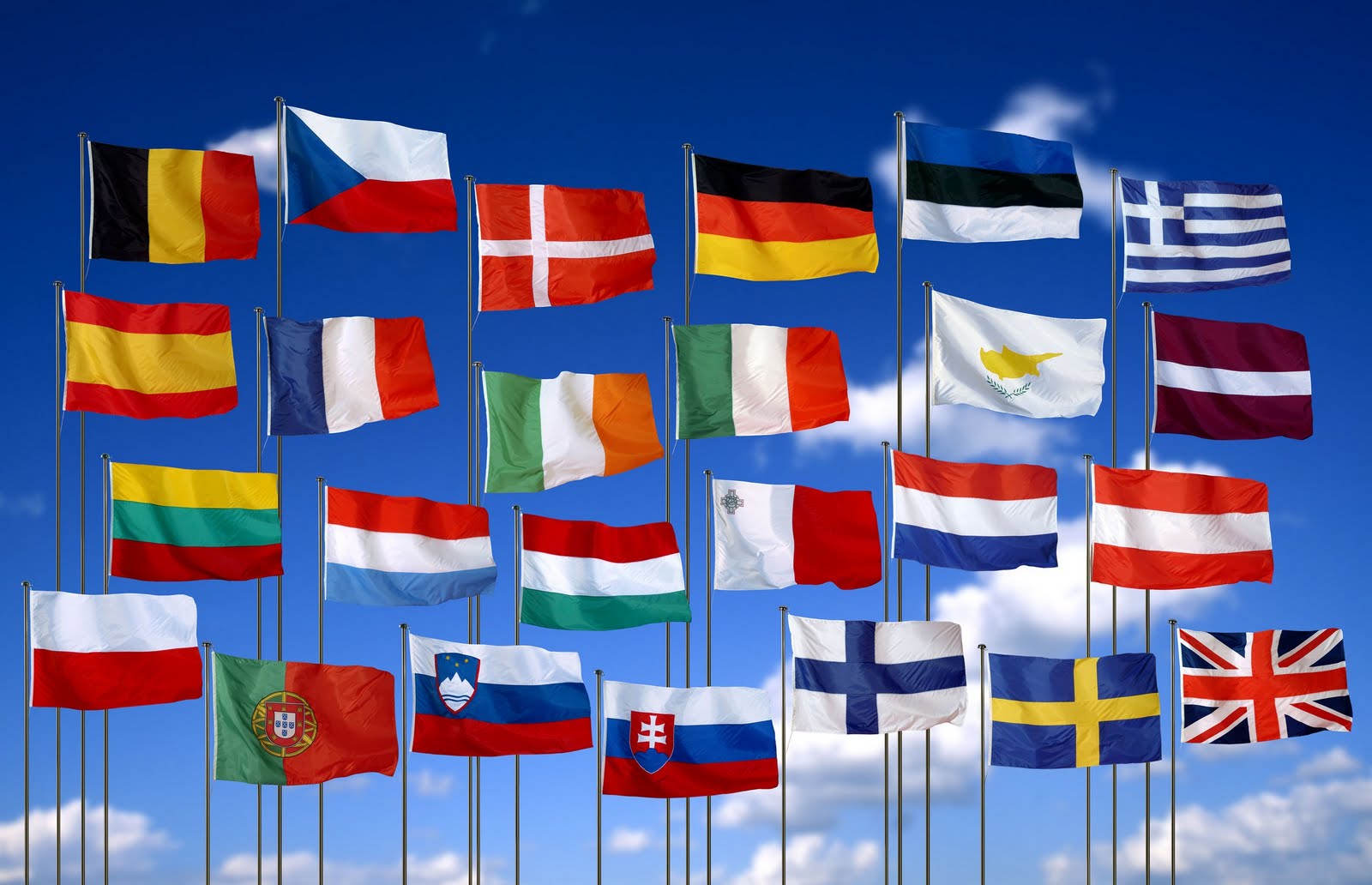
The euro as a currency is a strong example of another very good achievement that was efficiently but not completely put into practice. Britain, for example, refused to adopt the euro, but it was in a position to do so, while many other countries were not in an economic situation to join the currency system. So the European Union has a strong currency for some countries, but not for all. The financially weaker countries adopting the Euro in the present financial crisis might become a liability to support. Nevertheless, the euro is in itself so far one of the best achievements of the EU and can be considered a success.
But how about harmonizing very important decisions regarding foreign policy, defense and war? For a Swiss citizen it is absolutely inconceivable that part of Europe supported without any hesitation the policy of the Bush administration and joined the United States in the war against Iraq. Britain, Spain and other European countries sent troops under the US military fighting contingent, while France, Germany and others absolutely refused to join. For us, it was an example of a weak common foreign policy.
In addition and against the wishes of Germany and France, other EU countries for example, signed an agreement with the US government permitting US or NATO radar and rockets systems to be installed in their countries, directed officially against Iran. Russia considered these installations a threat against its territory. Also on this important point, the members of the European Union failed to agree. The foreign policy of Europe is not visible, anywhere. It’s everything and nothing, and the impact regretfully for all of us, is weak.
The European Union with so many unique democratic and strong countries might, however, have consolidated the whole system by achieving a consensus, clearly defining and agreeing about the direction it wanted to go in Europe and in the rest of the world, and identifying the targets to strive for in all important functions, needs and wishes of our human society and our political systems.
Yet before all that, the European Union decided to enlarge this incompletely defined system as much as possible, inviting several countries to join and possibly also partly in the Near East. It would mean expanding, after the eventual Turkish adherence, to the borders of Syria, Iraq and Iran . Is the goal of the EU to open the door to a future maybe stronger and more viable European and Middle East Union? Remember that Cyprus is only a few miles from Lebanon where lots of European crusaders had once taken refuge. If we take this a step further, you might include and bring peace to the entire Middle East with Israelis and Palestinians as part of the EU. What a miraculous achievement this would be for the whole world. Is there any valid reason to stop this development? Not only some Swiss but many Europeans, too, have been asking themselves the same question.
But in the meantime let us come down to Earth again. According to the information I have, the Swiss are among the people best informed about role and activities of the European Union. I am quoting Andreas Gross, a member of our House of Representatives and a Swiss citizen, who published an interesting article in the Swiss newspaper NZZ Neue Zürcher Zeitung on February 6, 2009, just two days before the Swiss people voted in favor of various contracts (among them the freedom of movement of new EU citizens) with the European Union, thus confirming the will of the Swiss people to continue along the bilateral way rather than enter the EU. Switzerland has had more referendums or votes about Europe than any other European country. Many votes, more than 50, about the European Union were held in several European countries during these last decades. The six founding members of the European Union or Community created in 1957, however, never asked their people for their agreement about shaping the European Union, except Britain successfully eighteen years later in 1975. In 2005, 48 years later, France asked its citizens if they wished to accept the European constitution. They refused, as did later Dutch citizens in 2006, and finally the Irish in 2008. Based on their direct democracy system Swiss voters like those in Denmark, are the people that are best informed about EU issues in Europe. Now let’s find out why the majority of the Swiss voters refuse to enter this EU.
Besides the facts already mentioned, no clear vision of Europe’s future is apparent in all the declarations, contracts and developments we have seen so far. The Swiss have no social, political, economic or financial incentive to join – on the contrary, they are and will be required to contribute heavily into the EU coffers. Chancellor Helmut Kohl for whom I worked as a member of his strategic industrial Committee for Germany, honored me with a private visit in Switzerland. During this visit he said “Nicolas Hayek, you have some credibility with the people of Switzerland. Why don’t you help convince them to join the EU?” I answered “Chancellor, why is it so important for the EU to have tiny – seven and half million – Switzerland on board?” And his answer came without hesitation and faster than a bullet “because you have a hell of a lot of money that we plan to put to good use”.
Swiss culture, mentality and education play a very big role in the natural reaction about the EU as we experience it today. Swiss society is one that completely despises power and violence, and violence through power. It is a society that loves peace and is absolutely against all physical violence. A concentration of too much power in one person or political party, for example, is not tolerated. Christoph Blocher of the Swiss People’s Party might be a typical and probably the most obvious recent example. His political party has the largest number of voters in Switzerland. It was widely agreed that he was an efficient minister but in an attempt to accumulate too much individual power he was voted off and stopped in his tracks by our House of Representatives and the Senate. Freedom and individual liberty for everyone have been imprinted in the Swiss soul since the country’s beginnings in the 13th century, long before the French revolution brought them to the fore. Individual freedom of the citizen is often more important than the state. To express it more clearly: the state has to serve the citizen, and not the citizen the state. They are part of the basic fundamentals cherished by the Swiss. It is no coincidence that Voltaire and many others fled to Switzerland to be free to write and speak. This is probably at the basis of the very rich tradition of political and financial shelter (such as banking secrecy), a right that the Swiss hold in such high regard.

Don’t forget also that it was a Swiss who created the Red Cross movement. Henri Dunant could not accept what he had seen on the European battlefields of Solferino in the late 19th century. The Red Cross is a typical Swiss creation, and it can only have the impact it has because the Swiss are considered and accepted worldwide as really neutral. What is more they are regarded as totally democratic and respectful of human rights.
May I also remind you that tiny Switzerland is a sizable industrial power with one of the strongest currencies in the world. It is also a financial power, and this will most probably also stay so in the near future, even if banking secrecy laws may be substantially modified or in the improbable worst case even abolished. The strong currency and political stability together with a deeply democratic and neutral environment will consolidate the safe haven message of a Switzerland with an honest financial industry cleaned of illegal criminal excesses.
In addition, the country never had the tendency to invade foreign countries in Africa, Asia, South America or elsewhere to create colonies, unlike many other but not all European countries. Not only Britain, France, Germany, Italy, Spain and Portugal, but also the Netherlands and Belgium were involved in creating colonies and occupied distant countries for many years. The Swiss have never considered having colonies desirable also because the Swiss mentality and society genuinely and fundamentally respect human rights and the integrity and sovereignty of each person and community in the world to a very high degree. Countries which previously had colonies did indeed also respect human rights but considered, at that time, colonies under a different aspect.
That is why Switzerland’s popularity and reputation in this respect are positive among the new emerging countries. This brings us to our neutrality. Even if our culture is really very similar if not the same as that of our neighbors and relatives in France, Germany, Austria and Italy (there is hardly a Swiss who does not have close relatives in Europe), Switzerland has been neutral since 1815; it does not belong to NATO or any other military union. Switzerland has been one of the very few countries that have been able to integrate minorities without restriction or compromise with exactly the same rights and possibilities. If you take Ticino, the Italian speaking part of Switzerland and look back at how many cabinet ministers of Switzerland have originated from that part of our country, you will be amazed at the impressive number. Without any exaggeration we could probably claim that in Switzerland, the minorities actually often have more rights than the majority. We are inclined to call it positive discrimination.
Another characteristic of Swiss society is that the Swiss have no desire for creating a personality cult around any individual or worshipping a politician, a minister superwoman or superman. Dominant personalities make the Swiss suspicious. They accept and vote for intelligent, experienced, efficient citizens who can carry out their duties as honestly as possible, who are careful spenders and users of taxpayers’ money. That is why our taxes are generally lower than in many of our neighbor countries even though the investments into our social institutions and infrastructures are higher than or at least as high as those of our neighbors. The Swiss use their democratic referendums and voting rights every time important decisions have to be taken at the level of community, towns, cantons and the confederation. This is direct democracy. Taxes have to be fixed or accepted by the tax payer. When it comes to budgets for example, we have a control system that is working quite well, even though we cannot claim that everything is under control nor that waste does not exist. We have our share of problems in this regard, too.

All my professional life I have openly criticized some destructive and / or illegal aspects of banking and financial systems. I also regularly criticized these issues in speeches and interviews in Switzerland and abroad. I am one of those Swiss citizens who over the years have kept a healthy suspicion about a large part of the financial economy worldwide in general and also naturally more specifically in Switzerland, in the USA and the United Kingdom.
However, many Swiss do not have a highly-developed sense of crime when it comes to declaring every bit of tax income. They rather tend to consider it a minor illegal offense (or as we say Kavaliersdelikt). The average Swiss government member, I repeat it, treats and manages the money of the tax payer as if it were his own, in a thrifty way. The Swiss didn’t appreciate the hypocritical excesses of the bailiffs and provincial governors from centuries ago who insisted on getting as much tax money from their subjects as they could, if necessary with brutal force of arms, often using this money against the interest of their subjects. I’m thinking now for example of the Swiss national hero, William Tell, in the play written by Germany’s Friedrich Schiller.
That’s why – let us call it a “forgotten” – income declaration was viewed as a rather minor illegal action without suspecting that it could be a serious criminal activity, as allegedly practiced lately by at least one very important Swiss bank. However, Switzerland or at least some officials claims to have the citizens with the lowest tax evasion percentage of all industrial nations. For each Swiss it is natural that every case of tax evasion, even “conveniently” forgotten, should be punished. On the other hand the punishment should be consistent and proportionate to the “crime” that is committed and not exaggerated and blown up to a dimension it does not deserve. As we all know, this kind of situation is gathering strong controversial momentum at this very moment. The protection of the personal sphere against the unlimited curiosity of the governments if legitimate is still considered of major importance by the Swiss, but not only be them. Other European countries lately joined battle with Switzerland over this issue.
Not only the personality cult around a superwoman or superman could not exist in Switzerland, but the government of Switzerland has absolutely no medals or decorations to honor citizens for outstanding performance. Yet, some Swiss citizens are proud of receiving decorations from foreign governments. The Swiss government is one of the most stable in the world. Practically all the important political parties are involved, thus resulting in a large acceptance by the people of Switzerland.
They all work together even in conflict situations and despite differing ideas, it is remarkable that they achieve an agreement, a compromise. We call it concordance. It does not always work as some people would like, but in the end, a solution is always democratically accepted by all, even though sometimes rather reluctantly. The people’s decisions are respected by all, I repeat by all, even by the most conceited minister or president.
The Swiss have a remarkably strong currency. Switzerland keeps a monetary discipline that makes the Swiss Franc one of the two or three most stable currencies in the world. It is even the currency that has been stable for the longest period in modern times.
We also have an amazing capacity for negotiating and finding compromises. It is one of the very central reasons for the stability of our political and social system that we always find acceptable compromises for everybody without having to fight an internal war. This is evident as I mentioned before, in the concordance. Or in the relations with our labor unions with whom we have found an agreement whereby strikes – destructive for both the economy and the work force and disturbing for the public – are almost non-existent. It is an amazing experience to be involved in tough negotiations which at the beginning show that the positions are miles away from each other, and yet after a few weeks or months of talks, everybody more or less happily agrees.
The result is for all a better and higher income than in most other countries, and a high standard of living for practically all. This creates a bridge between the practically non-existing levels of Swiss society that amazingly has no proletariat with big social differences between its people, no matter how big or low our income is, we feel all very equal and consider ourselves as full members of society. It might be dull for many young citizens, but for the stability and the health of a nation it is good to know that at the end no violence is necessary to come to an acceptable solution.
The Swiss are more global than most nationals of this world. Based on their education, the culture of Switzerland and the multilingual knowledge of many citizens as well as the small size of the country, a big majority of the Swiss travel extensively and know the rest of the world very well. They are highly respected for their behavior, for their mentality and for the quality of their work and products.
A very solid apprenticeship education, in addition to the universities, engineering and training schools based on the solidarity of industry with the people and between the generations, the excellent know-how of craftsmanship enriched with modern technology and the sense of beauty and for high quality are unique. Only few countries can claim a similar system. In Switzerland, these structures have been honed almost to perfection over many years in all sectors of the economy, from the locksmith, the plumber, from the carpenter to the cook and the patissier – all have an enhanced reputation of good Swiss work. Switzerland’s universities are among the best in the world: the Federal Institutes of Technology in Zurich and Lausanne, as well as the universities located in Berne, Basel, Geneva, Lausanne (where a Jean Monnet foundation for Europe has its home) Neuchâtel, Fribourg, Lucerne, Lugano, Zurich and so on. Switzerland also has one of the largest Nobel Prize winners’ list in the world compared with the size of its population.
Furthermore, Switzerland uses the militia system for its army and adopts the principle also to politics – in some smaller cantons an official has a part-time job, carried out in the spare time of the appointed minister. And amazingly – every army member can keep his or her weapon at home. This encourages the feeling of security and the nearness of the Swiss people to the army. However, the storage issue is presently under discussion and the system might change soon. We shall see.
Switzerland is a very modern community, and in practically every corner of its mountainous terrain the same modern infrastructures are developed as in all other areas. Social security at all levels, and health and invalidity insurance are among the most efficient in the world.
When talking about Swiss infrastructure I have to mention also the highly-acclaimed hospitals, the railroads that almost always run on time, and the high-quality research and development centers, genuine temples of knowledge. Let me add that the clean environment is another proof that the Swiss have the greatest respect for ecology, the beauty of the landscape and Mother Nature.
For all these reasons, and because of the absolute neutrality of Switzerland, the United Nations and many international organizations have set up a base in Switzerland. The International Olympic Committee, FIFA, the International Rowing Federation, the International Committee of the Red Cross, the nuclear research center Cern – and many others have chosen the neutral and secure ground of Switzerland for their headquarters, as well as some 1.6 million foreigners living happily and peacefully here. Switzerland has one of the highest if not the highest percentages of foreign citizens in the world. More than one person out of five is a foreigner mainly from the EU. This percentage is always increasing not least because of the life quality and high standard of living. And in this count the many frontaliers, the daily frontier commuters from France, Italy, Austria and Germany are not included.
Switzerland was created in the 13th century by three cantons and over time these states were complemented by 23 other cantons. Over hundreds of years, they have maintained a very strong sovereignty at the canton level. The Swiss government, as you all may know, is not very powerful compared with other countries, even though it has the power to decide and put into practice foreign policy, infrastructure and defense matters and many other important sectors of our life. But the Swiss don’t appreciate a strong central power, and even less so if it should be in a Brussels that is perceived as constantly seeking more power and influence.
We Swiss, like all human beings, also have lots of shortcomings, disadvantages and weaknesses, and yes, we make our fair share of mistakes. But we don’t have the need or the time today to talk about them because they are irrelevant in our decision-making process about Europe. In addition, they could not destroy the dynamic message of Switzerland. It is considered a pearl.
Entering the EU with our heart and soul might destroy a big part of this pearl. And this would neither be in the interest of the Swiss, nor in the interest of the people of Europe, let alone the interest of the rest of the world. Switzerland is no doubt European, it is in the heart of Europe, and nobody, not even the Swiss themselves, can cut us out of this wonderful and beautiful European map and landscape. That is why trade between Switzerland and Europe is paramount. We buy more from Europe than we sell to Europe, but both exports and imports are very substantial and absolutely vital as you all know. It would be a very big mistake if one of the two partners would try to blackmail the other on the issue of this very positive economic exchange.
Excellencies, Ladies and Gentlemen, these are the frankly presented, and I have to admit one-sided and perhaps overly positive views of an average Swiss and motivated European.
Now tell me, please, if you were Swiss, would you want to join this EU now? I even suspect very strongly that after listening to my speech, you would probably refuse to accept Switzerland in the EU should it wish to become a full member. But let’s keep the dialog open. Remember we can always find a constructive compromise.